The future of process modeling starts now!
Imagine being able to have your business processes modeled by a professional with just a few clicks—no manual work, no endless meetings to design processes. Sounds too good to be true? With intellior’s AI-powered BPM and GRC software, it’s a reality! In the following video, our Managing Director, Christopher Schaffert, explains how artificial intelligence is transforming process management, accelerating workflows, and further increasing corporate efficiency. See for yourself how easy it is to create smart processes and why this technology could be an absolute game-changer for your company. Don't miss out on this innovation—watch the video now!
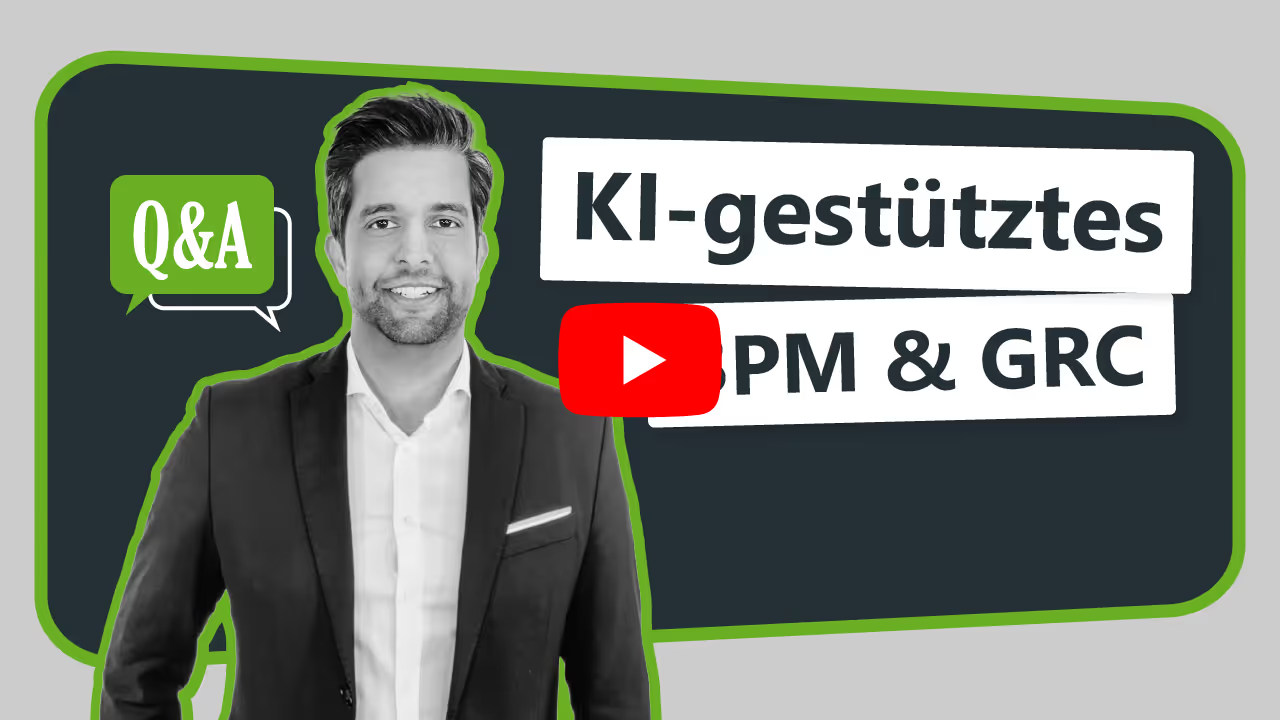
How AI is changing the daily work routine
The biggest advantage of AI is that it changes an employee's daily work by taking over many manual tasks and supporting users in their activities. Instead of setting up processes entirely by hand, AI can recognize patterns and generate templates, drastically reducing the workload. Companies that use AI-driven BPM and GRC software benefit from higher efficiency, fewer sources of error, and faster process optimization.
The importance of AI for companies and intellior
AI is a major topic in many companies. At intellior, the focus is on clearly defining the benefits of AI before jumping blindly into the trend. Numerous customer conversations have shown that the demand for meaningful AI support is enormous. That is why intellior has developed an AI-powered solution that is divided into different phases.
Two phases of AI integration at intellior
AI integration at intellior takes place in two phases. The first phase involves support tools that make employees' daily work easier. The second phase focuses on handling corporate data, which opens up entirely new possibilities for the digital workplace.
Phase 1: AI assistants for daily support
The first phase includes various AI assistants that make the daily lives of employees easier. Support from AI is particularly groundbreaking when it comes to modeling new processes. While a process previously had to be modeled manually from scratch, the AI now handles the majority of the work.

Process modeling with AI: From 0 to 80%
A major advantage is that companies are already known within the system. The AI knows which industry the company operates in, its size, and the environment in which it functions. This contextual information allows the AI to create a suitable draft for a process immediately. For example, an employee can specify that they want to create a new "Order to Cash" or "Price List" process—the AI then generates a template including tasks, responsibilities, and IT systems.
Instead of starting from scratch, the employee begins with a process that is 60–80% complete and only needs to be adjusted. This saves a tremendous amount of time while simultaneously improving process quality.

Optimization through AI-powered assistants
In addition, there are numerous smaller assistants that help to further optimize processes. These AI-powered tools analyze where there is potential for improvement, suggest optimizations, and assist with the fine-tuning of processes.
Another major topic is supporting employees in using the Aeneis BPM software. Here, AI assistants help find answers to questions and make processes more efficient.
Phase 2: Secure handling of company data
The second step goes beyond anonymous process modeling and focuses on the use of company data. While the system operates without specific data in Phase 1, Phase 2 involves working with real processes, manuals, and corporate knowledge.
Private AI cloud for data protection and security
To ensure this is done securely and in compliance with data protection regulations, intellior uses a private AI cloud. This ensures that all company data remains protected and is not shared with third parties.
Companies also have the option to connect their own AI infrastructure if they already have contracts with other AI providers. This data can then be seamlessly integrated into Aeneis via interfaces.

Game-changer: Dynamic interaction with processes
The biggest shift is in how employees interact with processes. While processes were previously accessed statically in the portal, AI now enables a completely new form of interaction. Instead of having to search for information, employees can simply ask a question, similar to ChatGPT, and receive the required data directly from processes, task descriptions, and IT systems.
Example: Automatic provision of quotes
A practical example is the sales process: A sales team member needs to create a quote for a product. Instead of clicking through countless contract attachments and approval workflows, she simply asks the system a question. The AI then automatically provides all relevant documents and indicates who needs to approve the quote. This makes the entire process faster, more efficient, and error-free.

Frequently asked questions about AI-powered BPM and GRC software
1. How can AI-powered BPM software increase efficiency in companies?
BPM software with AI optimizes business processes by automating repetitive tasks, identifying bottlenecks early, and enabling data-driven decisions. Employees save time because they no longer have to model processes from scratch; the AI suggests optimized workflows. This allows companies to react faster to market changes, reduce costs, and improve the quality of their processes.
2. What are the benefits of GRC software with AI for regulatory compliance?
GRC software with AI supports companies in complying with legal regulations by automatically identifying risks, monitoring compliance requirements, and simplifying audit processes. The AI continuously analyzes relevant documents and processes, providing early warnings of potential violations. This allows companies to meet their regulatory obligations more efficiently and avoid fines.
3. Is AI-powered BPM and GRC software also suitable for small and medium-sized enterprises?
Yes, small and medium-sized enterprises also benefit from AI-powered BPM and GRC software. Automated process modeling and intelligent assistants help to use resources efficiently and meet compliance requirements without significant personnel effort. Due to the software's scalability, it can be individually adapted to the company's needs and grows with its requirements.
Try it now: Let the AI model your processes automatically!
Experience AI-powered process modeling for yourself! Test our BPM and GRC software, Aeneis, completely free for one month and let the AI model various processes for you.

FAQs
How is AI changing process modeling in companies?
AI is revolutionizing process modeling by automating the creation of processes. In Aeneis, the AI instantly generates suitable process drafts based on contextual information such as industry, company size, and process type. This results in processes that are 60–80% complete right from the start, fully automatically, which saves time and increases quality.
How does intellior ensure data protection and data security when using AI?
All AI functions in Aeneis run in a private AI cloud, ensuring that company data remains protected at all times. No data is shared with third parties. Alternatively, companies can connect their own AI infrastructure if they already have existing contracts with AI providers.
Is AI-powered process management also suitable for small and medium-sized enterprises?
Yes. SMEs also benefit from AI in Aeneis. Automated process modeling and intelligent assistants help to optimize resource utilization and design efficient processes without the need for major implementation efforts or additional specialized departments.