





Process analysis reimagined
The requirements for process analysis have changed significantly in recent years. While the focus used to be on key performance indicators, reports, and dashboards, a different question is now taking center stage:
Are processes within the company truly understood and correctly implemented?
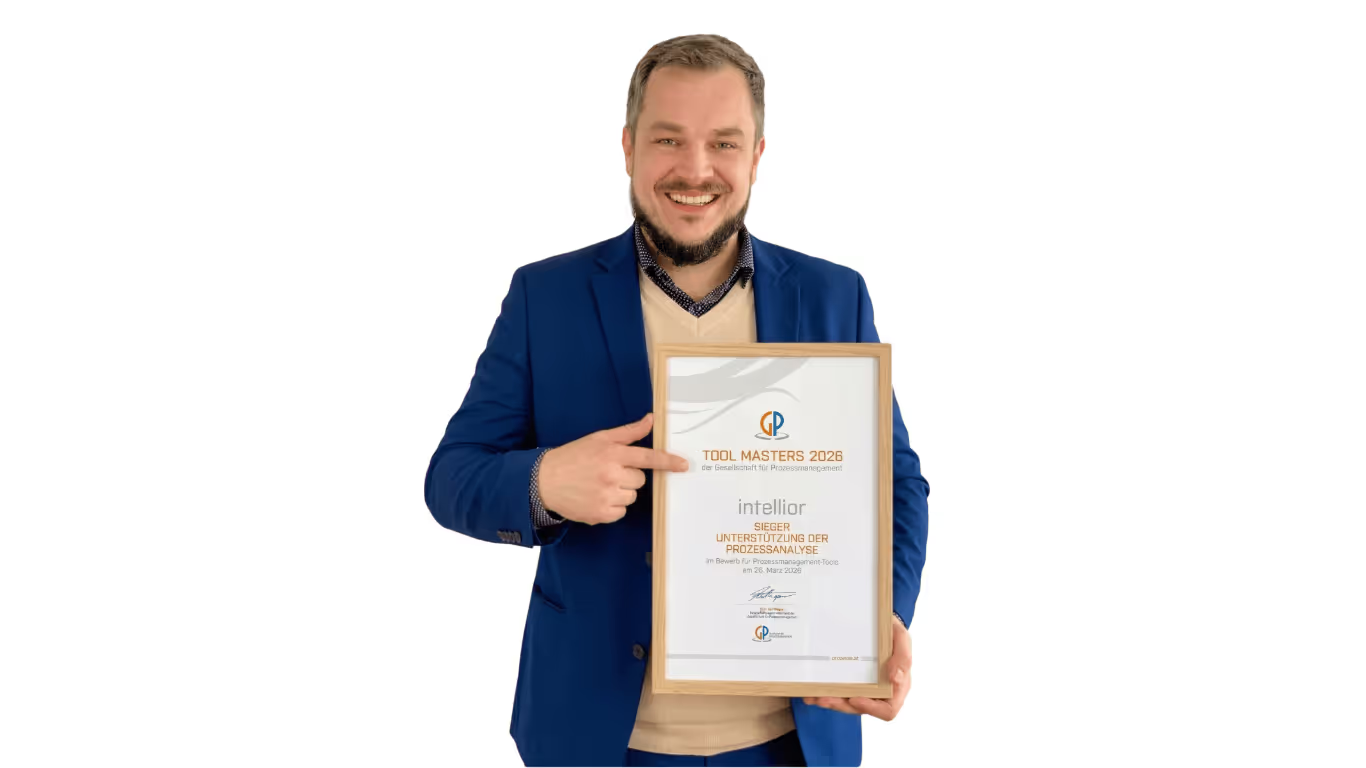
This is precisely where Aeneis stood out at the Tool Masters 2026 . 1st place in the process analysis category demonstrates that the market is evolving toward a holistic understanding of Business Process Management (BPM) and Governance, Risk & Compliance (GRC). We would like to thank the Gesellschaft für Prozessmanagement for the nomination and for the excellent organization of the event. For those who were unable to attend, we have linked our video presentation here:
Process analysis software & BPM
What modern process analysis must deliver
Many companies use process analysis software to:
- document processes,
- evaluate KPIs,
- identify optimization potential
That is the foundation. However, for regulated industries such as finance, critical infrastructure, energy, or healthcare, this is not enough.
Because in these sectors, the rule is: process analysis must not only show what is happening, but ensure that it is happening correctly.
"We connect data, we don't just paint pictures." - Steffen Hoffmann, Senior Sales Executive & Partner Manager at intellior GmbH
The limitations of classic BPM approaches
Classic BPM tools reach their limits when:
- processes are highly dependent on people
- decisions are made individually
- risks need to be understood in detail
This creates a risk, especially with so-called mission-critical processes: a process can be modeled correctly and still be executed incorrectly.
GRC, compliance, and risk management
Why compliance fails without understanding
In the context of GRC (Governance, Risk & Compliance), a core problem emerges:
- Documentation is in place
- Policies are defined
- Audits are passed
Yet in day-to-day operations, it often remains unclear:
Do employees really know what they need to do?
In many organizations, compliance is still viewed as a box-ticking exercise rather than a lived practice.
The crucial shift in perspective
Modern process analysis bridges the gap between BPM and GRC:
- Processes are not just modeled
- Risks are not just documented
- Compliance is not just confirmed
Instead, we verify whether everything is understood and applied.
Continuous Compliance & Compliance Management
Compliance Manager: The key to measurable process analysis
With the Compliance Manager, Aeneis expands classic process analysis by a crucial dimension: proof of understanding.
How the Compliance Manager works
The Compliance Manager automatically generates:
- role-based compliance tests
- based on real process content
- including tasks, risks, and documents
Every employee is tested specifically on their area of responsibility.
This means:
- no generic training
- no superficial confirmations
- but concrete, verifiable results
From one-time compliance to continuous compliance
The approach behind it: Continuous Compliance
Companies should be able to ensure on an ongoing basis that:
- processes are understood
- compliance is maintained
- risks are identified
Not ad hoc, but continuous.
Process management in practice
From process model to real-world implementation
A common problem in process management:
A gap emerges between the model and reality.
The Compliance Manager helps bridge this gap:
- understanding is verified
- knowledge gaps are revealed
- measures can be targeted and managed
process analysis becomes actionable
The results flow directly into:
- dashboards
- Reports
- Action processes
This makes process analysis:
- operationally useful
- audit-relevant
- decision-supporting
Benefits for regulated industries
Why continuous compliance is especially relevant for critical infrastructure and similar sectors
Highly regulated industries face specific requirements:
- Proof of compliance
- Audit readiness
- Risk transparency
This is where the Compliance Manager offers clear advantages:
- Verifiable process understanding
- Early risk detection
- Audit-proof documentation
The bottom line: Why Aeneis is redefining process analysis
Winning the Tool Masters 2026 shows that:
Process analysis is evolving from simple evaluation to active assurance.
Today, companies need more than just:
- reports
- metrics
- documentation
They need:
- understanding
- proof
- control mechanisms
This is exactly where Aeneis and its Compliance Manager come in.
Are you ready to take your process analysis to the next level?
Find out how Aeneis and Continuous Compliance help you:
- Make understanding measurable
- Identify risks early
- Ensure sustainable compliance
Schedule a live demo or test Aeneis for yourself.

Frequently asked questions about process analysis and compliance
What is modern process analysis?
Modern process analysis goes beyond KPIs to verify whether processes within a company are understood and implemented correctly.
What is Continuous Compliance?
Continuous compliance describes the approach of ensuring compliance on an ongoing basis through the continuous verification of understanding and application.
How does the Compliance Manager differ from traditional training?
While training conveys knowledge, the Compliance Manager actively verifies whether this knowledge has been understood.
Which companies is this relevant for?
Primarily for companies with:
- high regulatory requirements
- complex processes
- critical business operations
How complex is the implementation?
Since the Compliance Manager builds on existing processes, no separate content creation is necessary.


