Imagine: The annual audit season is imminent and this time it's calm. No Excel panic. No late-night reconciliations. No frantic search for process knowledge. Instead, you open a dashboard and see at a glance:
- The most important processes are up to date.
- Risks and controls work.
- Employees have proven that they really understand their responsibilities.
- You can monitor, control, and continuously improve critical processes.
What sounds like the future will be a reality for many companies in 2026. Because the framework conditions have changed dramatically: Regulatory pressure continues to rise, skilled workers are scarce, cyber risks are increasing and those responsible in ISMS, risk management, audit and quality management must “do more in less time.”
But the biggest change comes from within the organization itself: Mission-critical processes must be more reliable, transparent and resilient than ever before.
Aeneis from intellior is creating a new standard for this. And the 2026 trends show why companies must now break new ground in BPM & GRC.
Trend 1: Continuous compliance is becoming a new guiding principle
2026 will be the year in which compliance is no longer seen as a selective project, but as a continuous process. Companies must be able to prove that their processes are compliant, secure and effective at any time, not just before an audit. By integrating AI and comprehensive data models, risk management is moving away from Excel lists and static reports towards a continuous process of control and improvement.
Process owners today invest enormous resources in process modeling and documentation, but the benefits often fizzle out because employees don't really understand the content. Traditional acknowledgements (“checking boxes”) do not provide real security. Employees formally confirm that they have seen the process, but not whether they have really understood risks, controls, or outputs.
With Aeneis, this is fundamentally changing, because the new strategic direction is: “The effort that companies invest in process and specification documentation must pay off in real effectiveness. ”
Aeneis is driving this change ahead with the new Compliance manager:
- automated, role-based review of process knowledge (compliance checks)
- AI-generated questions about risks, controls, outputs, and responsibilities
- evidence that employees have really understood processes
- dashboards for compliance status, training needs, and risk gaps
- documented measures and continuous monitoring
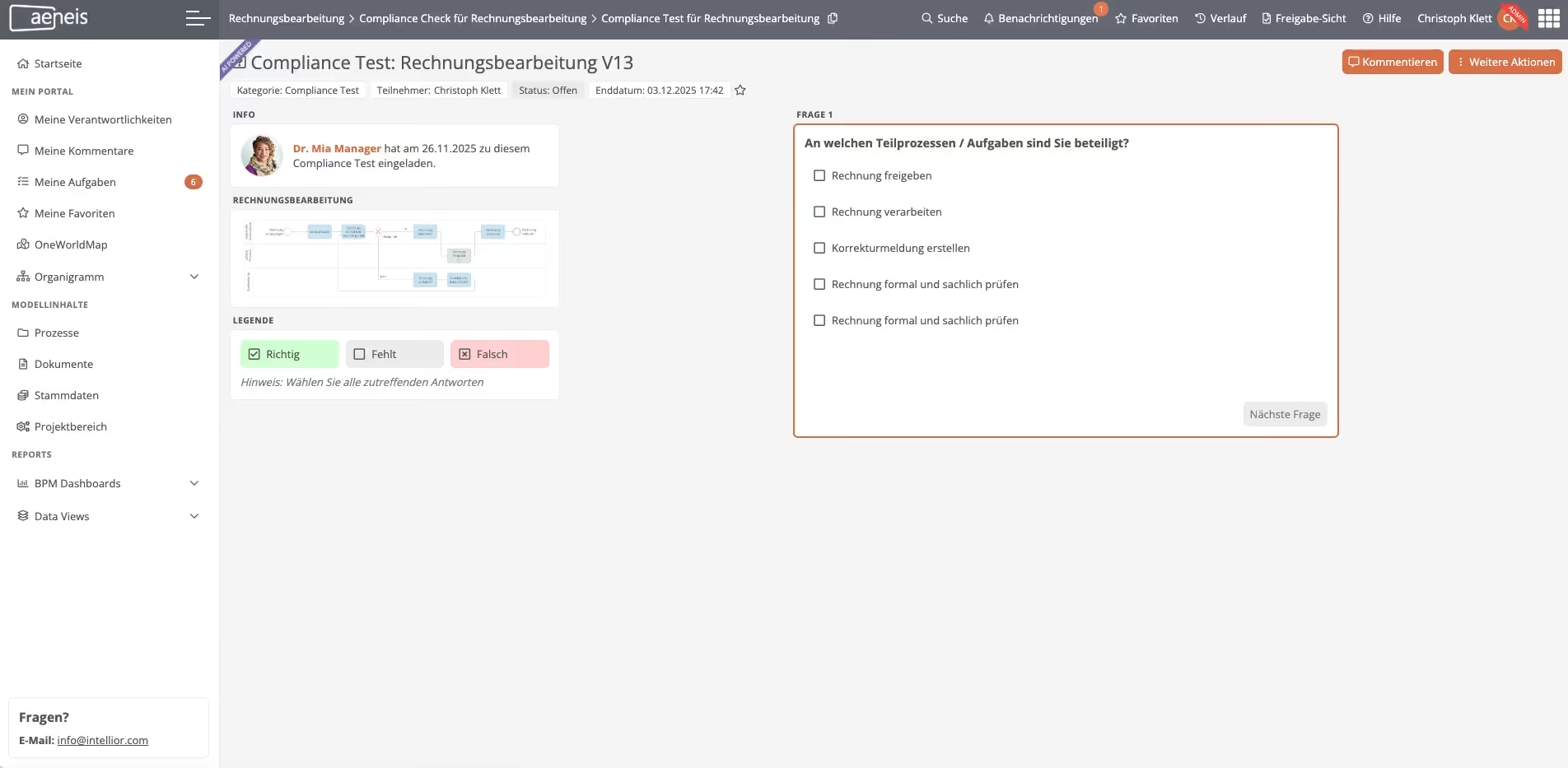
Continuous compliance is thus becoming a strategic advantage, especially for regulated industries. Because only those who can monitor processes in real time and strengthen responsibilities in a targeted manner remain audit and risk-proof in the long term.
Trend 2: Mission-critical processes at the center of corporate management
Companies often have hundreds of processes, but only a fraction is really critical to success. In 2026, organizations will focus their energy on precisely these processes.
Mission-critical processes are those that:
- secure the basis of business,
- are relevant from a regulatory point of view,
- have a high risk or damage impact,
- or are decisive for the security and stability of a company.
A process is only truly effective when people understand their procedures, risks, controls, and tasks.
“If you want to achieve more security and more control in your mission-critical processes, then you definitely have to find a way to ensure that these processes can be carried out in compliance, i.e. exactly in accordance with defined company guidelines. “- Christoph Klett, managing director intellior GmbH
Aeneis supports organizations through:
- Process maps to identify critical processes
- Risk assessments and controls per process
- Clear roles, responsibilities and RACI references
- Compliance checks that prove real effectiveness
- Maturity analyses to control process quality
Especially in heavily regulated industries, mission-critical processes are becoming the linchpin of governance. This is where it is decided whether companies act resiliently or fail in an emergency.
Trend 3: The organization's digital twin is becoming a reality
2026 will also increasingly focus on the company's digital twin. More and more organizations recognize that a process diagram alone is not enough. A networked business model that makes relationships, dependencies and effects visible is crucial.
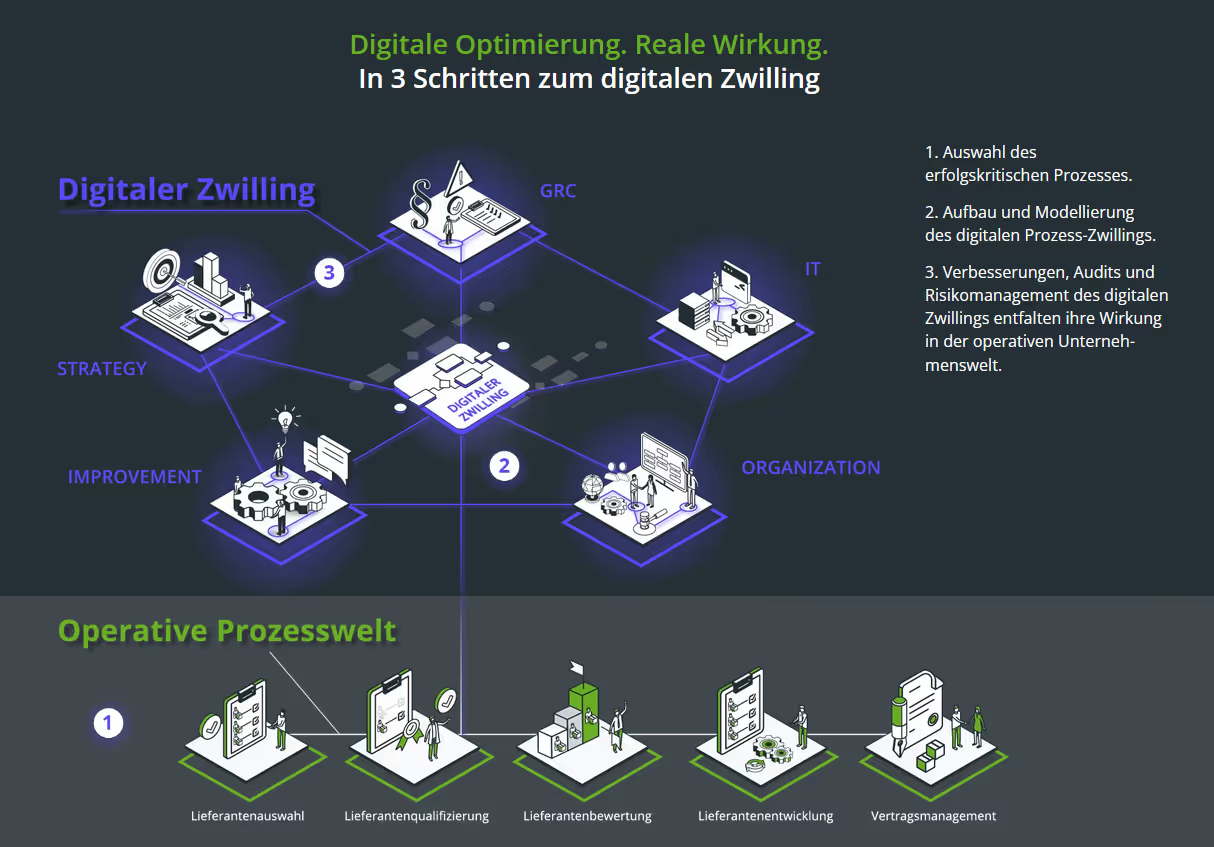
The digital twin of a company is a completely networked, digital image of the organization. A digital twin depicts the dependencies of all influencing information factors on the process and combines the following levels in a model:
- Procedure: Processes and process chains
- Organization: Organizational units, roles, employees, legal entities, locations, customers, positions & external partners
- IT: IT systems, interfaces, workflows, automation and outputs
- GRC: Laws, standards, requirements, risks, controls, measures, audits, documents, deviations and training
- Strategy: Mission, vision, strategy, goals, metrics, and maturity levels
- Improvement: Ideas, comments, improvements, tasks, and notifications
Aeneis provides a complete business model for this purpose. Every change, whether in a process, document, or system, automatically affects risks, compliance, and responsibilities.
Companies thus receive:
- Transparency about dependencies
- A better basis for decision-making
- Faster response to changes
- Risk-based management instead of gut feeling
- Clearly defined effects of every process change
This digital twin is essential for mission-critical processes. It creates the basis for resilient and audit-proof organizations.
Trend 4: BPM & GRC are moving to where people work — to Microsoft Teams
Process management must not be a completed specialist tool. In 2026, the trend towards human-centric BPM is gaining in importance: Process knowledge must be visible where employees work every day.
With the new Aeneis app in Microsoft Teams that is exactly what is possible:
- Notifications are displayed directly in Microsoft Teams
- Favorites from Aeneis are immediately visible in Teams
- Notices about comments, approvals, or compliance tasks appear in real time
- Employees get directly to the relevant object
- Without additional login, without media interruption
“The guidelines for your mission-critical processes can be accessed directly from your employees' daily control center using the Teams app” - Christoph Klett
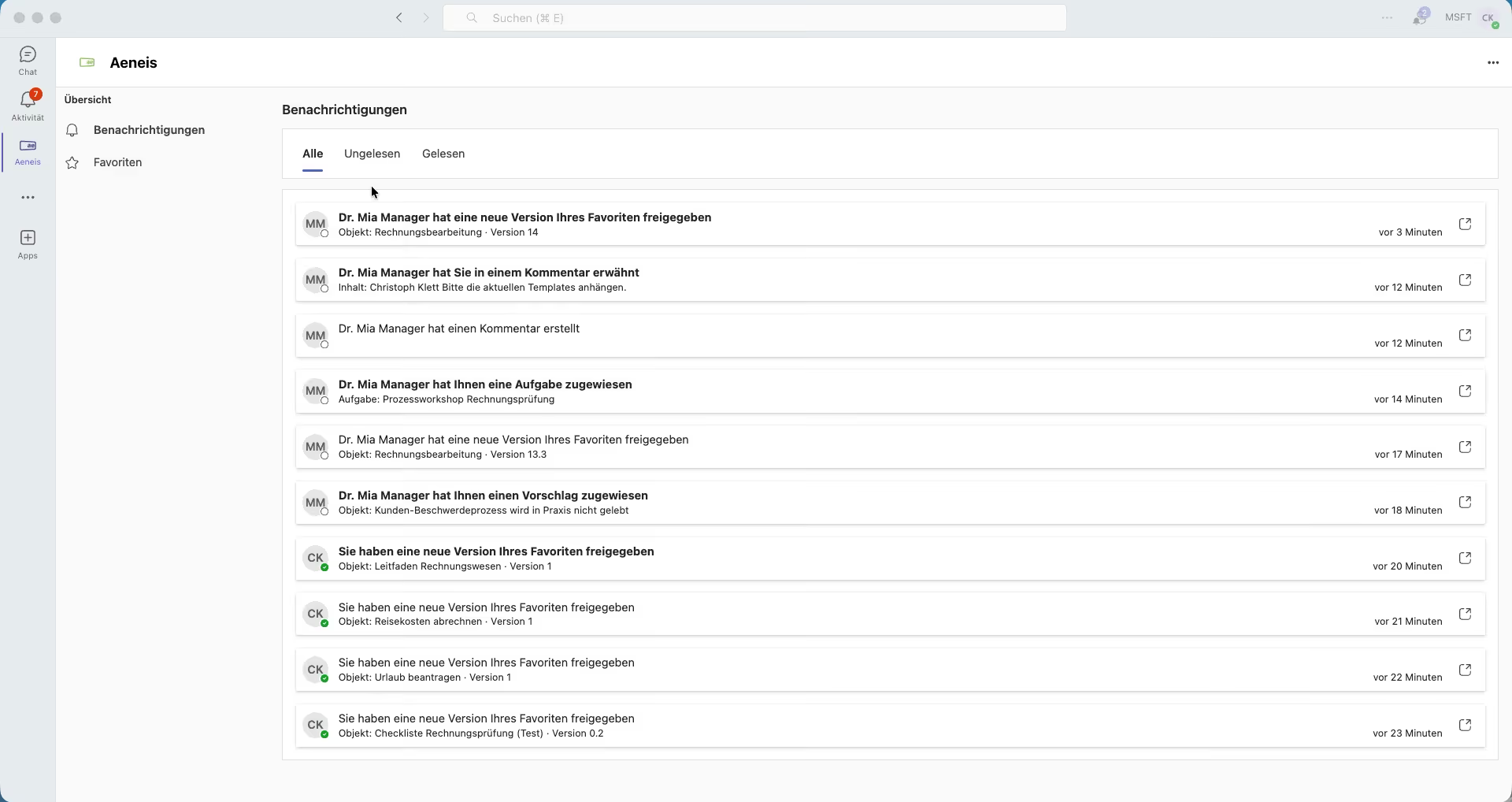
BPM and GRC are thus moving to where people really work. This increases acceptance, accelerates response times and facilitates collaboration across departments. For process managers and those responsible, this means that important process events are no longer overlooked, but are immediately noticed and processed.

Trend 5: Regulatory pressure is increasing, GRC is becoming a strategic foundation
For many companies, 2026 will be a year of regulatory challenges. Several major EU and ISO requirements are taking full effect and require clear, process-oriented implementation. Companies must not only be compliant, but must also be able to prove at any time how their requirements are controlled, monitored and anchored.
Overview of relevant 2026 regulations:
- NIS-2: Many affected companies will be fully focused on cyber resilience audits for the first time in 2026 and require comprehensible security and risk processes.
- DORA: Financial and insurance institutions must prove their digital operational security through documented, tested and lived processes in 2026.
- CSRD/ESRS: From 2026, the extended sustainability and governance reporting requirements require process-oriented management and transparent, auditable evidence.
- ISO 27001:2022: After the end of the transition period, companies must be completely converted to the new standard version in 2026 and clearly document their ISMS processes.
- EU AI Act: From 2026, there will be new requirements for risk analysis, documentation and governance for AI systems, making structured processes indispensable.
- LkSG/CSDDD: In 2026, there is increasing pressure to present risk analyses, prevention measures and escalation processes along the supply chain in a comprehensible manner.
- ICS/internal controls: Audit-proof, process-oriented documented controls will become more important in 2026, as supervisory authorities increasingly require reliable evidence.
These developments show that regulatory requirements can no longer be managed in isolation in documents, but must be process-oriented, linked and continuously monitored. This is exactly where BPM and GRC platforms such as Aeneis develop their strength: Standards chapters can be linked directly to processes, roles, risks, controls and measures. The high-level structure, the high-level matrix and the integrated GRC apps create a consistent, auditable system that not only manages requirements, but also makes them effective.
Aeneis therefore meets a key expectation of modern governance: regulatory requirements must be embedded in processes, not stored in isolated documents.
Integrated all-in-one platforms define the future of BPM & GRC
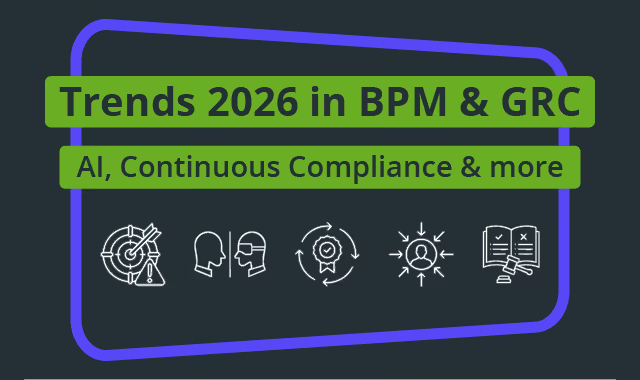
The 2026 trends show a clear development:
- Continuous compliance replaces selective audit projects
- Mission-critical processes become control anchors
- The digital twin creates transparency and resilience
- Teams integration brings BPM & GRC directly into everyday work
- Regulation makes integrated GRC functionality essential
Companies need platforms that bring all of these requirements together. Aeneis is built exactly for this future: an all-in-one solution that integrates process management, GRC, AI and collaboration into a central, process-oriented business model.
Let us show you how your company too can be up to these trends in 2026. Book a free and non-binding live demo with our experts!

FAQs
Why is continuous compliance so important for companies in 2026?
Regulatory requirements such as NIS-2, DORA, ISO 27001:2022 or CSRD require continuous, verifiable monitoring of processes, risks and controls. With Aeneis, companies can meet these requirements by making compliance, process knowledge and responsibilities permanently visible, auditable and controllable.
How does Aeneis specifically support the management of mission-critical processes?
Aeneis makes success-critical processes understandable, accessible and applicable, links them to roles, risks, controls and requirements, and helps employees to perform their tasks safely. This makes the integrated management system effective and can be experienced in everyday work.
What is the role of the organization's digital twin in Aeneis?
Aeneis represents processes, roles, documents, risks, measures, IT systems and standard requirements in a networked business model. This makes it possible to see the impact of changes, where risks exist and how organizations can manage their processes in a resilient manner — a basis for robust governance and compliance structures.
What added value does the Aeneis app for Microsoft Teams offer?
The Teams app brings processes, responsibilities, tasks, and notifications to where employees work every day. This increases acceptance, security and effectiveness, as relevant information, approvals, tasks or compliance tests appear directly in everyday working life and cannot be overlooked.
Why are integrated BPM and GRC platforms such as Aeneis 2026 particularly relevant?
Companies are faced with a growing number of standards and legal requirements that must be implemented in a process-oriented manner. Aeneis integrates BPM, ISMS, risk management, ICS, data protection, audit management and continuous compliance into a central system, creating a consistent basis for governance and resilience.