
The RACI matrix is a proven RACI method tool for clarifying roles and responsibilities in processes and projects — a central issue for process managers, information security officers, risk management officers or QM officers. Particularly in regulated industries such as finance, energy, healthcare, mechanical engineering or KRITIS operators, the question regularly arises:
“Who does what, who decides, who must be involved and who must be informed? ”
The RACI matrix provides a clear and comprehensible answer. RACI stands for four types of responsibility:
With the matrix, you can assign responsibilities transparently and bindingly, improve communication in the process and avoid misunderstandings or duplication of work. It thus promotes governance, efficiency and traceability, central requirements for internal audits, external audits and management systems in accordance with ISO standards.
In Aeneis, the RACI matrix is a separate view in processes. The four types of responsibility are systematically applied to process elements such as tasks, sub-processes or complete processes. The assignment is carried out directly in the model, can be versioned and is documented in an audit-proof manner.

KRITIS companies, such as financial institutions, energy suppliers and healthcare facilities, and mechanical engineering benefit in particular from the RACI matrix in Aeneis:
In Aeneis, the RACI matrix is not only documented, but systemically embedded and that makes the difference. Responsibilities (responsible, accountable, consulted, informed) are maintained directly at the process elements and are therefore part of the living corporate model.
What does that mean in practice:
Result: Responsibilities are not only visible in Aeneis, but can also be controlled and audited. This reduces risks, increases governance quality and ensures clarity during audits, certifications or ICS audits.
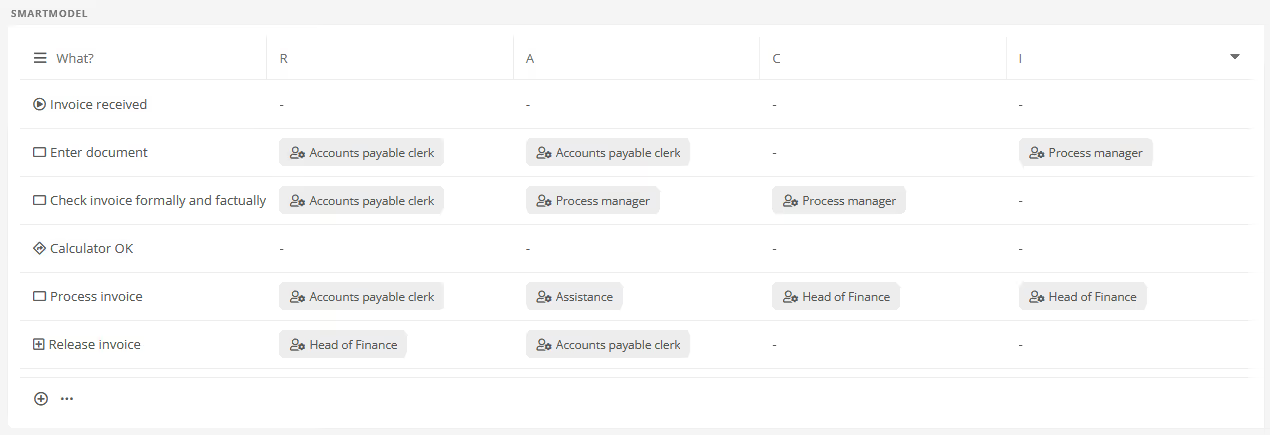
The RACI matrix in Aeneis is much more than a simple RACI table; it is an integral part of digital, auditable and future-proof GRC and process management. For companies in regulated markets, it creates the basis for responsibility, compliance and efficiency.


