
The organizational structure describes the static structure of a company. It determines how tasks are distributed, how responsibilities are organized and how the hierarchy is structured. It answers the question of who plays which role in the company and how individual areas are linked to each other.
The process organization describes the dynamic structure of a company. It determines how activities run in time and objectively, which process steps follow one another and how information flows between roles and areas. It answers the question of how work is actually carried out and added value is created.
Both organizational forms complement each other and together form the foundation of a process-oriented, controllable and audit-proof company.
Aeneis represents the organizational structure based on the stored organizational objects. This includes elements such as legal units, organizational units, regions, positions and employees. As soon as these objects have been maintained in Aeneis, the portal automatically creates an organizational chart that correctly and hierarchically visualizes all structures. For example, management, deputy management, employees, roles, positions, locations, or professional assignments can then be visible on each shape.

Further features are:
This complete transparency of the organizational structure makes it easier to assign responsibilities, improves governance and supports regulatory requirements centrally.
The process organization is represented in Aeneis as a holistic process model. Processes are modeled using BPMN diagrams or maintained in tabular form (SmartModel), generated manually or via AI. Each element, such as tasks, events, roles, documents or IT systems, is directly linked to each other. Aeneis also automatically creates column charts, which represent all subordinate processes of a process organization in a structured manner. This makes the process landscape visible graphically and hierarchically down to the process level.
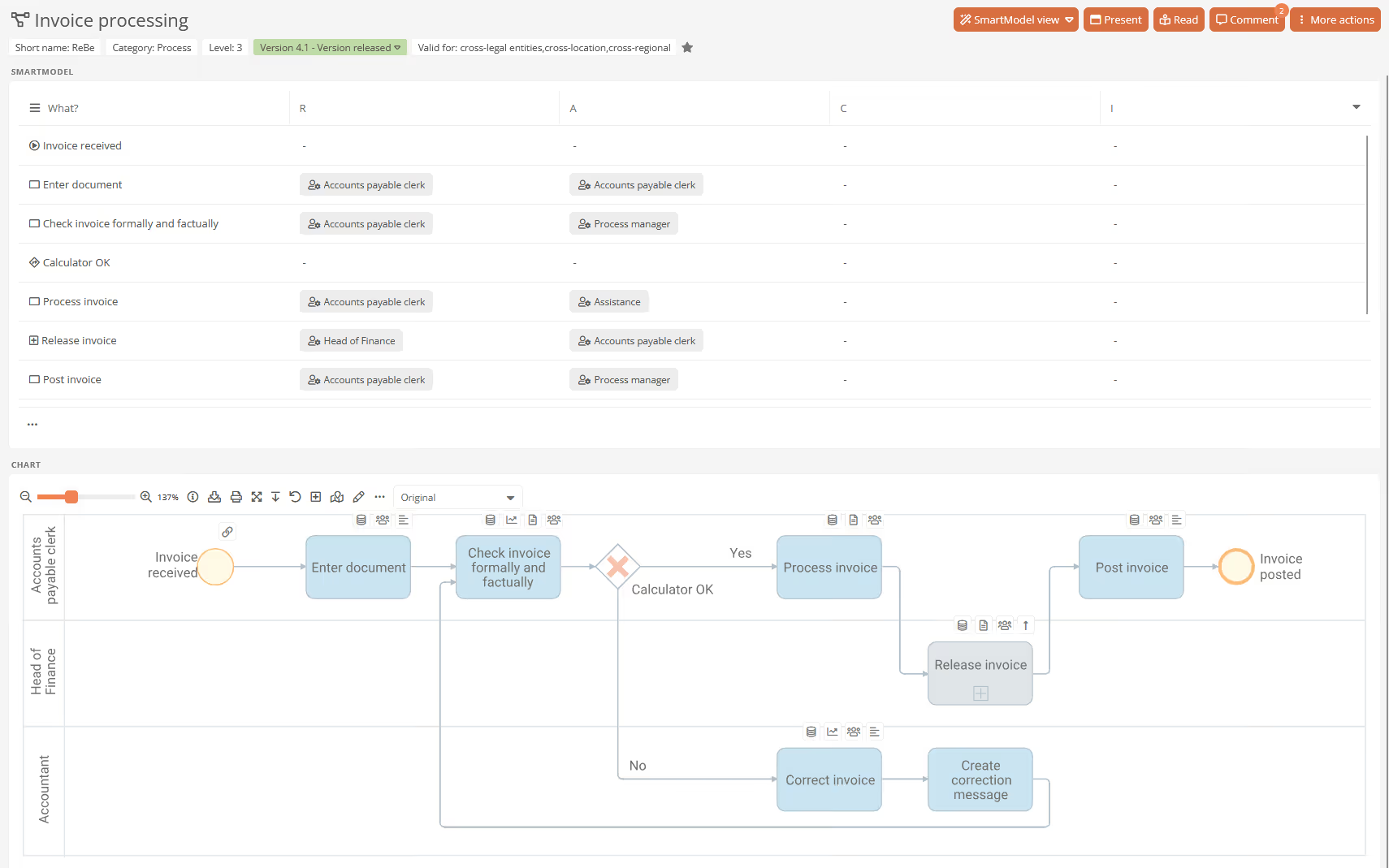
The features include:
These functions provide a clear, orderly and audit-proof view of a company's operational processes.
More about process management in Aeneis
In practice, both types of organization are inextricably linked: Each process requires roles, responsible persons, operational managers or auditors, and at the same time, each organizational unit must know which processes are taking place in its area.
Aeneis completely links organizational and operational structures:
This creates an integrated business model in Aeneis that precisely combines the structural world and the dynamic world (process), ideal for governance, audits, process optimization and regulatory traceability.
Aeneis ensures clarity, consistency and transparency in both forms of organization. Typical benefits for target groups:
Especially in regulated industries, the close integration of both organizational forms helps to efficiently fulfill complex documentation requirements and to have a reliable business model at all times.


