Germany in 23rd place in the digitization ranking
IMD World Digital Competitiveness Ranking 2024 makes it clear: Germany has some catching up to do when it comes to digitization by international standards. While countries such as Singapore, Switzerland and Denmark take the top spots, Germany is only in 23rd place. But what does this mean in practice for the economy, companies and public administration?

What is Business Process Management (BPM)?
Business Process Management (BPM) is a structured process for analyzing, modeling, automating and optimizing business processes. Companies use BPM to make their processes more efficient, transparent and agile. BPM includes not only technological solutions, but also strategic and organizational approaches for continuous improvement of processes.
BPM regards business processes as central elements of a company. It enables organizations to understand, document, and control their work processes so that they are optimally tailored to business goals. This involves identifying bottlenecks, automating processes and eliminating inefficient working methods. The results: shorter turnaround times, lower costs, and higher customer satisfaction.
How does BPM help modern companies?
In an increasingly digitalized world, companies are forced to continuously develop. BPM gives them the opportunity to react flexibly to new market requirements and to minimize operational risks. Modern BPM software solutions enable complex business processes to be mapped in real time and help companies meet regulatory requirements reliably.
A key advantage of BPM is the automation of recurring processes. This not only reduces manual errors, but also relieves employees of repetitive tasks so that they can concentrate on strategic and value-adding activities. BPM also improves company-wide collaboration by breaking down silos and connecting all participants along a uniform process structure.

In addition, BPM contributes to decision making by providing data on process performance and efficiency. Companies can make data-based decisions, identify bottlenecks early on and implement continuous improvements. This creates an agile and resilient organization that can adapt quickly to market changes.
The challenges of digital transformation
According to the study, the ranking assesses the ability and willingness of economies to use digital technologies as the main driving force for economic change. The results for Germany show that although the digital infrastructure and integration of new technologies have progressed, there are still serious challenges:
- Lack of transparency and documentation: Companies and administrations are struggling with inconsistent and often opaque processes.
- Unclear responsibilities: Who is responsible for digital innovations? Decision-making processes are often too slow and not very agile.
- Lack of standardization: Different digital systems are often not compatible with each other, which hinders efficiency and automation.
- Regulatory hurdles: The multitude of legal requirements and regulations further complicates digital transformation.
The consequence of these challenges is that processes are often inefficient and prone to errors. This can lead to production errors, higher costs, complaints, and ultimately to dissatisfied customers.
Business process management as a solution for digital challenges
Targeted process digitization can solve these problems. This is where Business Process Management (BPM) comes in. BPM is a methodical approach to analyze and optimize business processes and make them more efficient through automation. The key to this is a powerful BPM software such as Aeneis, which supports companies to:
- plan business processes — through structured process maps,
- optimize their processes — by identifying bottlenecks and automation,
- roll out their processes — through standardized and transparent workflows,
- live their processes — through continuous process improvement,
- dominate their processes — through uniform management and documentation,
- harmonize processes across locations — for a uniform and efficient process landscape.
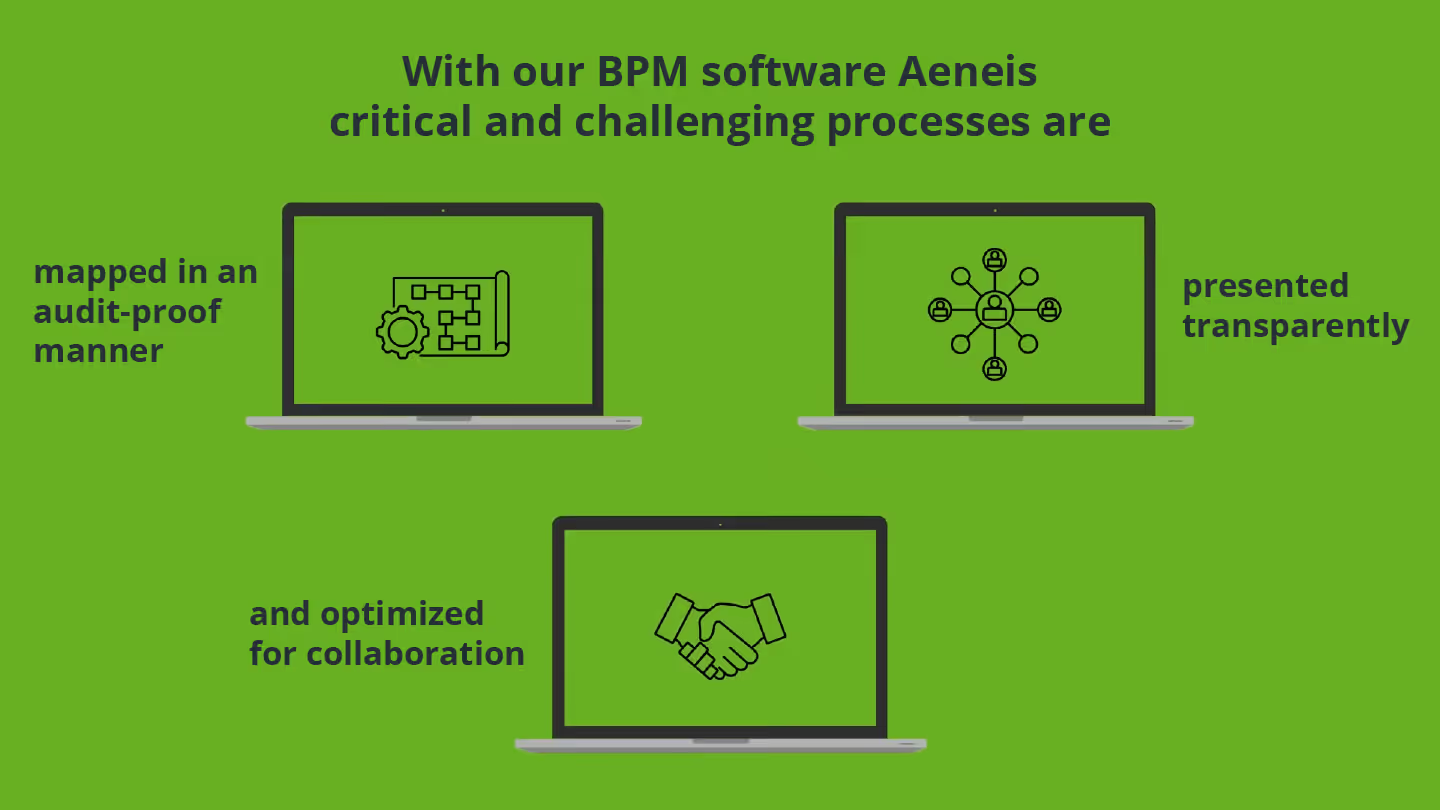
With a BPM suite such as Aeneis, companies can map critical and challenging processes in an audit-proof manner and ensure optimal cooperation within and outside the organization. This not only leads to smooth processes, but also to defect-free production, more efficient manufacturing processes and satisfied customers.
Why BPM is the key to the digital future
Imagine a large manufacturing company: Different departments work with their own processes, which are often not coordinated with each other. Orders are delayed, production errors creep in, and customers have to wait a long time for their products. The result? Dissatisfaction among employees and customers as well as rising costs. With an integrated BPM approach, these problems could be solved: The processes would be transparent, automated and efficient — with a direct impact on company performance.
Another example: A bank is faced with the challenge of adapting to new regulatory requirements. Without uniform process control, compliance errors can occur, which result in heavy penalties. The use of BPM ensures that every step is documented in an audit-proof manner and implemented in accordance with the rules. This not only protects against penalties, but also creates trust among customers and investors.
The future of digitization in Germany
The IMD ranking also shows that technological progress is driven by factors such as artificial intelligence (AI), blockchain and quantum computing. These technologies can widen the digital divide, but at the same time enable innovative leaps and bounds and transform entire industries and economies. How companies and governments work together to overcome digital hurdles is crucial. Countries at the top of the rankings prove that close integration between politics, business and science can accelerate digital transformation.
Germany must improve its digital competitiveness in a targeted manner. An important step is to use modern BPM solutions to digitize business processes and achieve efficiency improvements. Companies that invest in their process landscape today are well prepared for the future.
Take the first step towards digital excellence: Try Aeneis for free and experience the benefits of professional process management!

FAQ
What is Business Process Management (BPM)?
Business process management (BPM) is a structured approach for analyzing, modeling, automating, and optimizing business processes. The aim is to make processes more efficient, transparent, and agile. With BPM software such as Aeneis, companies can document, automate and continuously improve processes for greater efficiency and better results.
Why is BPM so important for companies?
In an increasingly digitalized economy, BPM is the key to greater competitiveness. It helps companies identify, standardize and automate inefficient processes. This reduces costs, minimizes risks and relieves employees of routine tasks because they can concentrate on value-adding activities.
How does Aeneis help companies with digital transformation?
Aeneis provides a central platform for recording, modeling and optimizing processes. Companies gain transparency across all processes, can quickly identify bottlenecks and implement changes efficiently. In this way, digitization and process management are holistically combined.
What are the challenges of digitization in Germany?
According to the IMD Digital Competitiveness Ranking 2024, Germany is only in 23rd place worldwide. The main problems are opaque processes, lack of standardization, unclear responsibilities, and complex regulatory requirements. BPM solutions such as Aeneis help to specifically address these weak points.
How can BPM help avoid inefficient processes?
By clearly documenting and automating processes, BPM creates transparency and consistency. Companies identify bottlenecks early on and can continuously improve processes. With Aeneis, processes can be controlled, tracked and harmonized across locations in an audit-proof manner.
Why is BPM the key to the digital future?
BPM creates the basis for agility and innovation. It connects people, systems and data along standardized processes. Companies that use BPM can react more quickly to market changes, comply with regulatory requirements and work more efficiently over the long term.